
Traditional Architecture and Art of Khanh Hoa
Introduction
Khanh Hoa attracts tourists not only with its blue sea and white sand but also with its traditional architecture and art, deeply marked by history and culture. From ancient Cham towers to village communal houses and temples, each structure tells a story of cultural exchange and local identity.
Ponagar Tower – Champa Heritage
- Ponagar Tower is a typical architectural work of the Cham people, built from the 8th to 13th centuries.
- The tower's architecture, made of fired brick and intricately carved, demonstrates the high artistic level of Champa.
- This is a place of worship for the goddess Thien Y A Na, a symbol of the beliefs and spiritual life of the local people.
- Every year, the Ponagar Tower festival attracts thousands of tourists and pilgrims.
Village Communal Houses – Preserves of Vietnamese Culture
- The village communal houses in Khanh Hoa are places of worship for the tutelary deity and also serve as centers of community life.
- Village communal houses (đình) are typically made of wood, with curved tile roofs and intricately carved dragons and phoenixes.
- These communal houses reflect the integration of Vietnamese culture with the coastal region, creating a unique characteristic.
Ancient Pagodas – A Mark of Buddhism
- Khanh Hoa has many ancient pagodas such as Long Son Pagoda (Nha Trang) and Tu Van Pagoda (Cam Ranh).
- The pagoda architecture is traditional, harmoniously combining nature and sculptural art.
- The Buddha statues, reliefs, and decorative patterns demonstrate the sophistication and deep faith of the people.
Traditional Arts
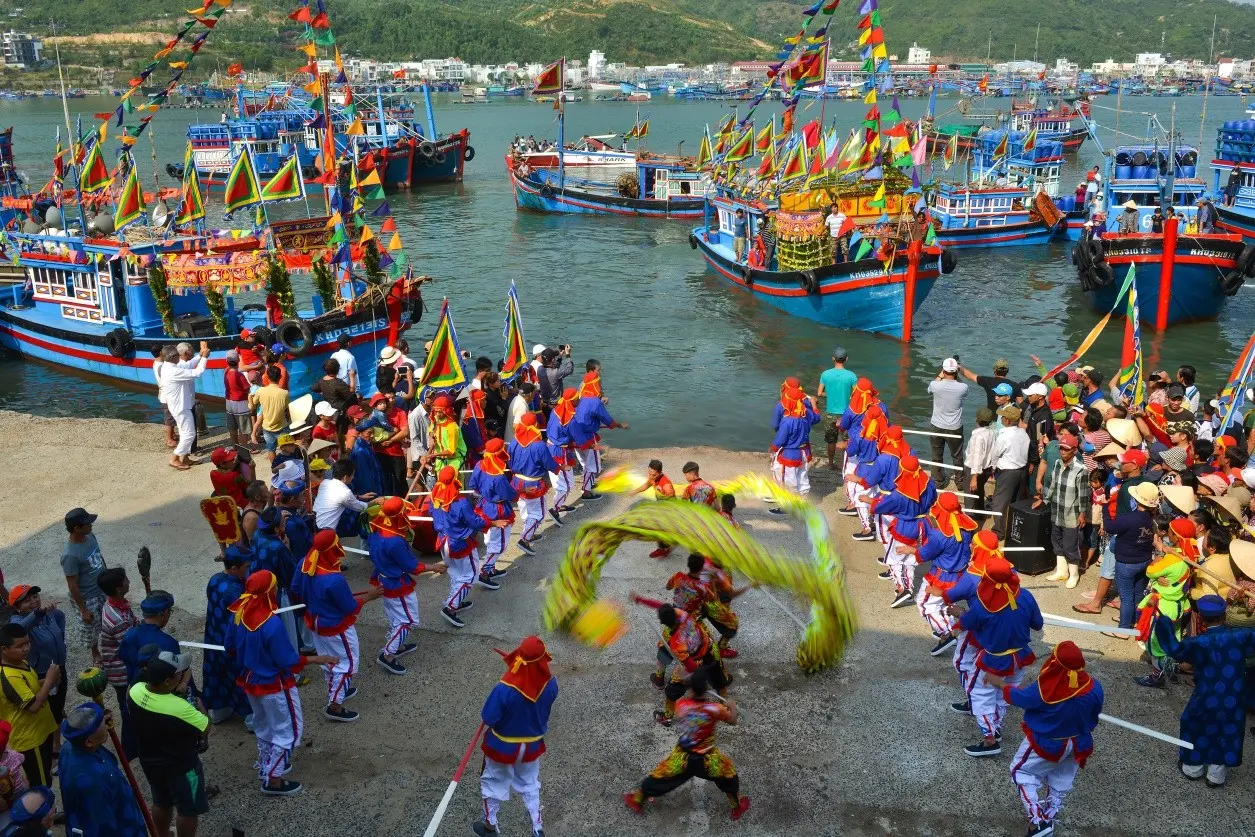
- Ho Ba Trao – a folk art form closely associated with the lives of fishermen, often appearing in fishing festivals.
- Lion, dragon, and unicorn dances in festivals express the spirit of unity and community joy.
- The art of carving and sculpting on wood, stone, and brick in ancient structures is evidence of the creativity and talent of the artisans.
Conclusion
The traditional architecture and art of Khanh Hoa are a harmonious blend of Champa heritage, Vietnamese culture, and Buddhism. This is not only a historical and cultural value but also a source of inspiration for tourism development, helping visitors gain a deeper understanding of the identity of this central coastal region.